


Why Utah Lawns Turn Brown in August
- Landscaping
-
Comment (0)

Why Utah Lawns Turn Brown in August
Why Utah Lawns Turn Brown in August
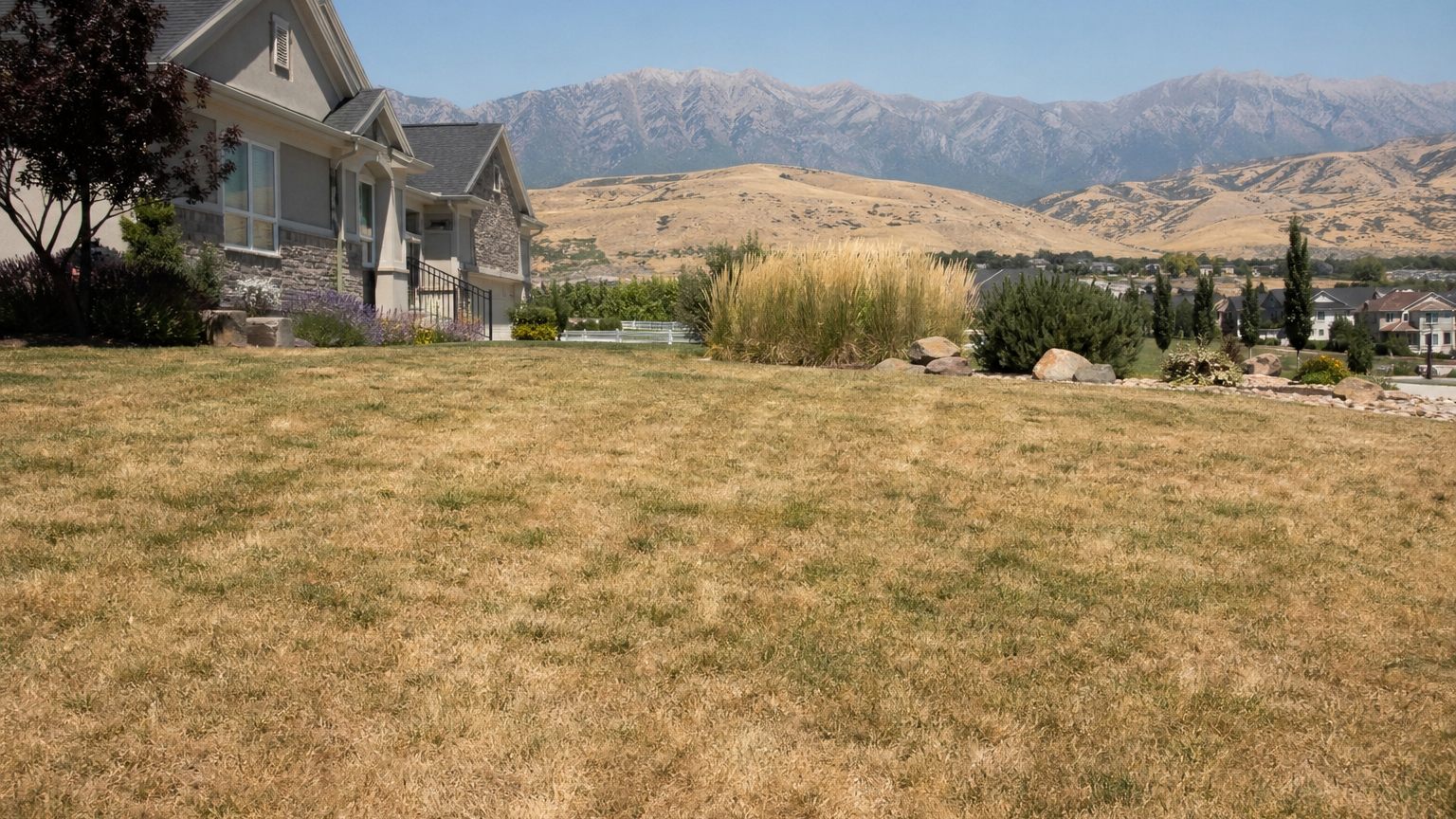
If your lawn looks tan and tired by mid-August, you are not alone. Browning grass is one of the most common concerns we hear from homeowners in Ogden, Layton, Roy, West Haven, Riverdale, and Brigham City. The good news is that brown does not always mean dead. Here is what is actually happening and what you can do about it.
Dormancy vs. Drought Stress: What Is the Difference?
Utah lawns are mostly planted with cool-season grasses like Kentucky bluegrass and tall fescue. These grasses are not built for 95-plus-degree days. When summer heat peaks, they have two responses:
- Dormancy — a natural survival mode where the grass goes brown and stops growing to conserve energy. The root system stays alive and the lawn will green back up when temperatures drop and water returns.
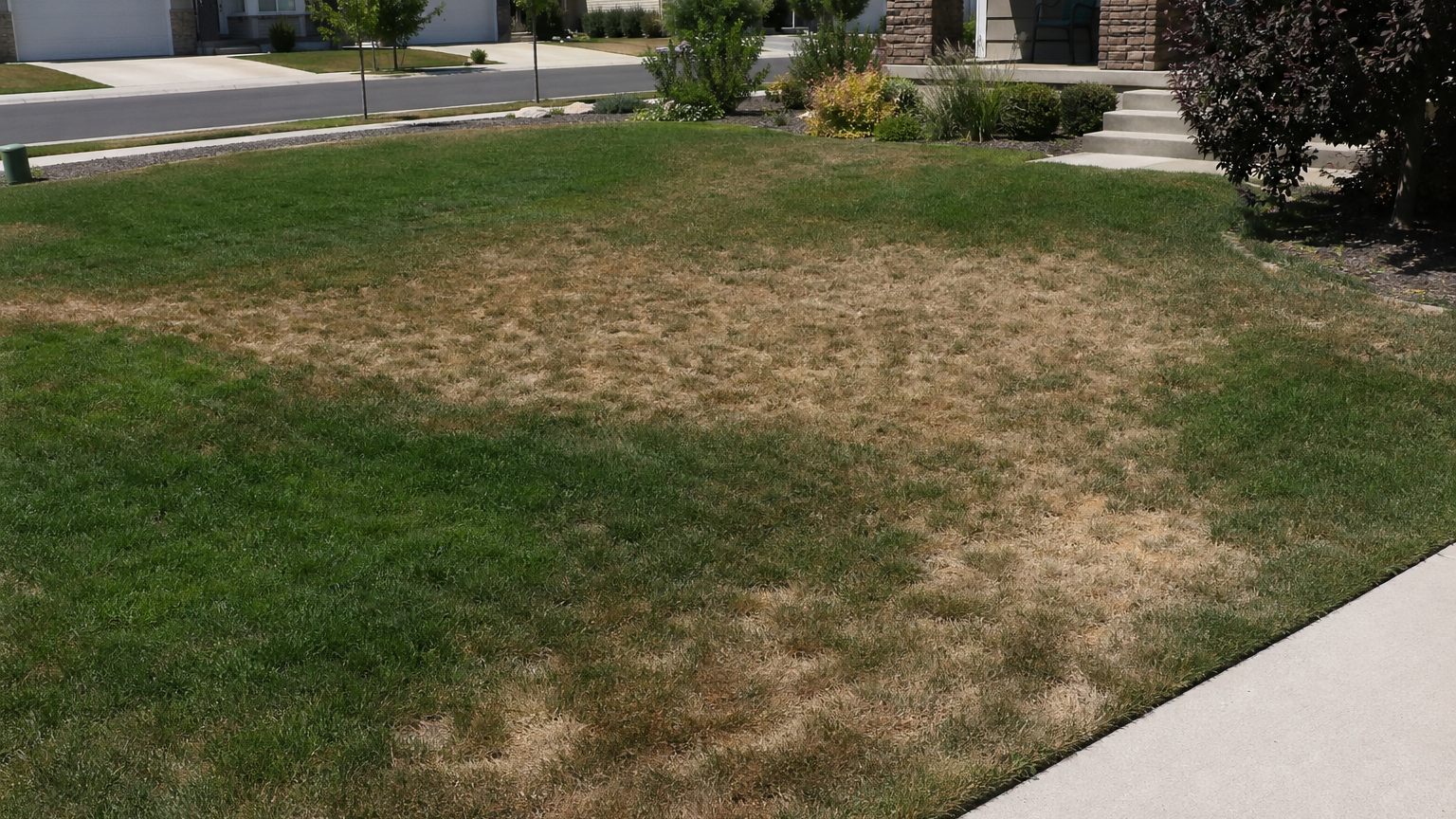
- Drought stress — what happens when the lawn does not get enough water to maintain itself. If stress continues too long, it can cross into actual die-off, especially on sandy or compacted soils.
The difference matters because dormancy is manageable while drought die-off requires overseeding or resodding to fix.
Common Reasons Utah Lawns Brown in August
1) Watering at the Wrong Time of Day
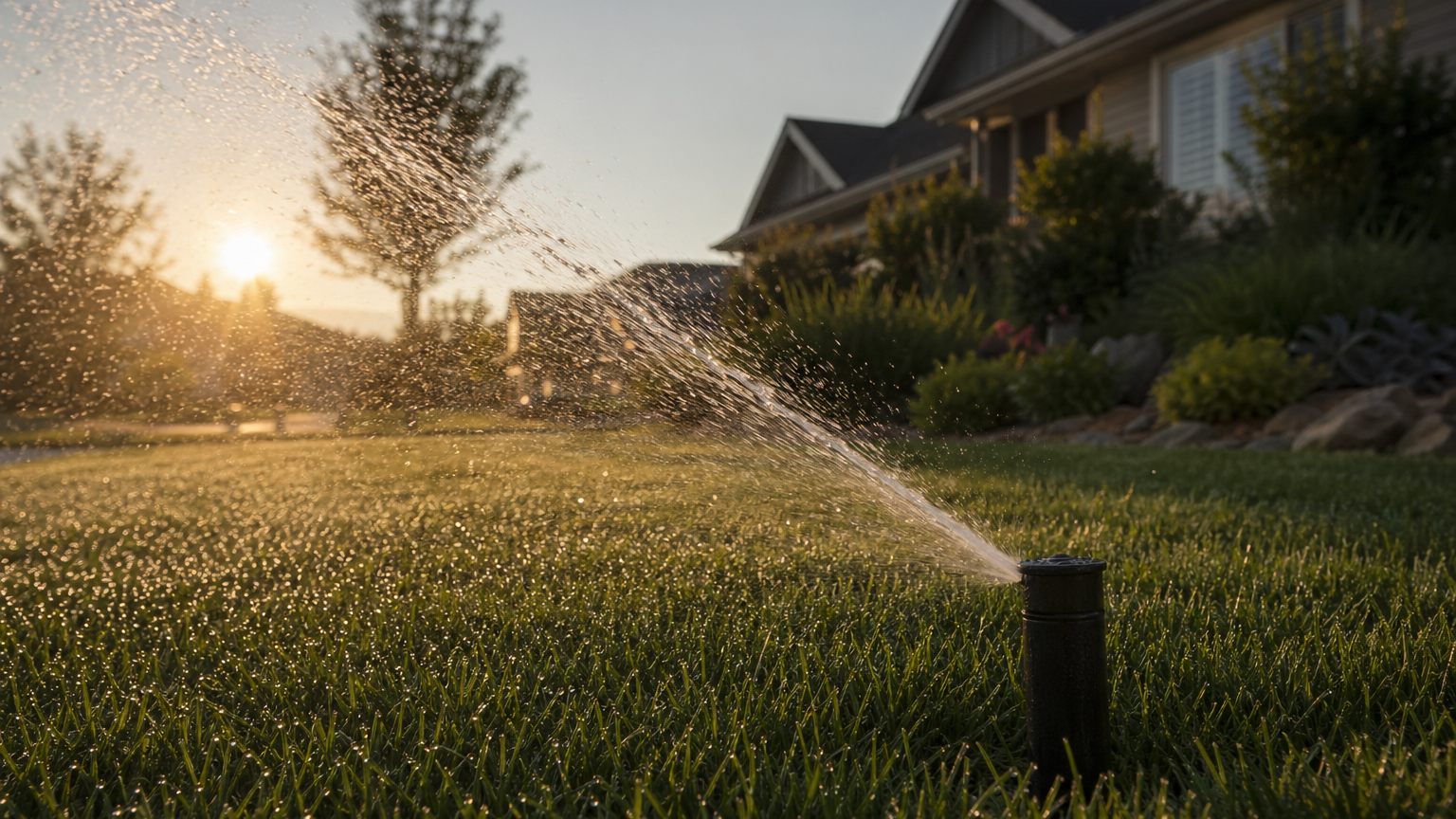
Watering midday in August means most of the moisture evaporates before it reaches the roots. Early morning — between 4 and 8 a.m. — is the most effective window in Northern Utah summer heat.
2) Shallow, Frequent Watering
Short daily watering cycles train roots to stay near the surface where they are most vulnerable to heat. Deep, infrequent watering (two to three times per week for longer run times) pushes roots deeper and builds drought resilience.
3) Compacted Soil
Hard, compacted soil blocks water from penetrating to the root zone. Water runs off the surface instead of soaking in, leaving roots dry even when the sprinklers run on schedule. Core aeration each fall helps prevent this cycle from repeating.
4) Irrigation Head Coverage Gaps
Broken heads, clogged nozzles, or heads that have shifted out of alignment create dry spots that show up fast in August. A mid-summer sprinkler check can identify these before they cause visible damage.
5) Thatch Buildup
A thick thatch layer acts like a sponge at the soil surface, intercepting water before it reaches the roots. If your thatch is more than half an inch deep, dethatching or aerating can significantly improve water uptake.
6) Normal Seasonal Dormancy
Sometimes the lawn is simply doing what cool-season grasses do. If browning is uniform across the lawn (not in patches), the grass is likely dormant rather than stressed. Dormant lawns need about one inch of water per week to stay alive, but do not need to be kept green.
How to Tell If Your Lawn Is Dead or Dormant
Pull up a small section of grass and look at the crown — the white or light green base just above the soil. If the crown is still firm and slightly moist, the grass is dormant and will recover. If the crown is dry, brittle, and pulls up easily with no resistance, that section may be dead.
What to Do Right Now
- Adjust your irrigation schedule to water deeply two to three times per week, early in the morning.
- Check your sprinkler heads for gaps, breaks, or misalignment.
- Raise your mowing height to 3–3.5 inches to shade roots and reduce moisture loss.
- Do not fertilize in August — pushing growth during peak heat adds stress, not health.
- Plan for fall aeration and overseeding to recover any thinned or dead areas before winter.
When to Call a Landscaping Professional
If large sections of your lawn have not responded to adjusted watering by late August, or if you are seeing irregular dead patches that look different from the rest of the lawn, it may be time for a professional assessment. Fungal disease, grub activity, and irrigation system failures can all mimic drought stress and require different solutions.
Gold’s Landscaping Can Help
We provide lawn care, irrigation inspection, aeration, and overseeding services across Ogden, Layton, Roy, West Haven, Riverdale, and Brigham City. If your August lawn has you concerned, we can take a look and give you a straight answer on what is going on and what it will take to fix it.
Call 801-824-1453 for a consultation, or contact us online.