


Converting Your Yard to Desert Landscape or Xeriscape During Water Restrictions
- Landscaping
-
Comment (0)

Converting Your Yard to Desert Landscape or Xeriscape During Water Restrictions
Converting Your Yard to Desert Landscape or Xeriscape During Water Restrictions
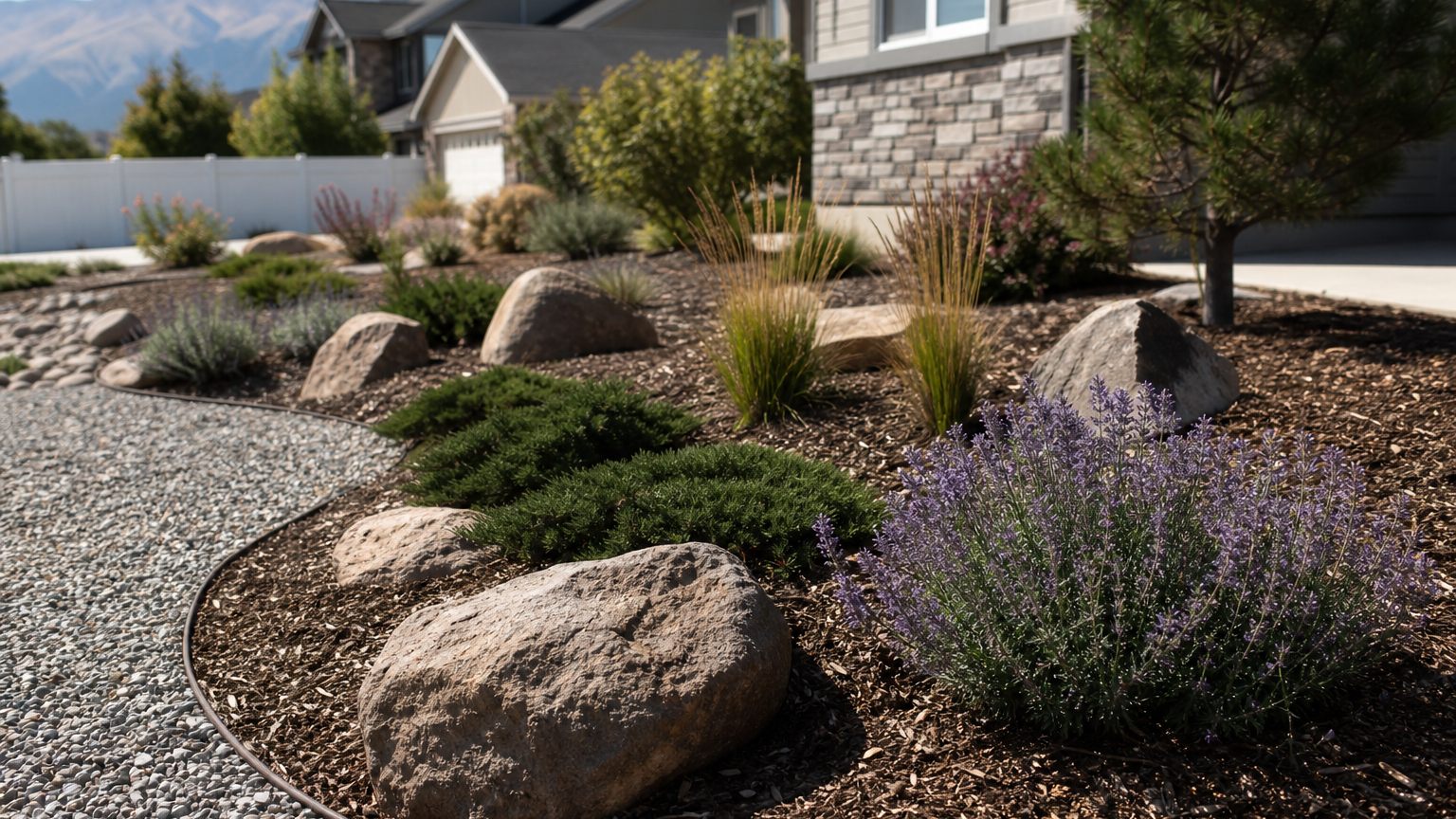
With water restrictions becoming a regular part of Northern Utah summers, more homeowners are rethinking the traditional grass-heavy yard. Converting to a desert landscape or xeriscape design lets you keep curb appeal, cut water bills, and stop fighting a losing battle with thirsty lawns. Here’s what to know before you make the switch in Ogden, Layton, Roy, West Haven, Riverdale, and Brigham City.
Desert Landscape vs. Xeriscape: What’s the Difference?
People use these terms interchangeably, but they are not exactly the same:
- Desert landscape — Heavy use of decorative rock, gravel, boulders, and a smaller selection of arid-climate plants like yucca, agave-style succulents, and ornamental grasses. Lower planting density, more open hardscape.
- Xeriscape — A water-wise design philosophy that can range from rock-and-cactus to lush-looking gardens. The focus is on right-plant, right-place, efficient irrigation, and reduced or eliminated turf — not on a specific look.
Most Northern Utah conversions land somewhere in the middle: a xeriscape with desert-style accents, regional plants that handle freeze–thaw, and decorative rock or mulch as the dominant ground cover.
Why Homeowners Are Making the Switch
- Water restrictions are not going away. Watering windows, day-of-week limits, and time-of-day rules are now standard during dry years.
- Lower water bills. A converted yard can use a fraction of the water a traditional lawn requires.
- Less maintenance. No weekly mowing, no constant fertilizing, no patching dead spots in August.
- Better curb appeal in summer. A xeriscape stays attractive when neighboring lawns go brown.
- Rebates may apply. Some Utah water districts offer cash incentives for removing turf — worth checking before you start.
Planning a Conversion the Right Way
The biggest mistake homeowners make is killing the grass, throwing down rock, and calling it done. A few months later they have weeds growing through landscape fabric, washed-out areas where rock has slid, and a yard that looks worse than before. A proper conversion is a real project — here is the right sequence:
1) Map Your Zones
Decide where you actually use lawn (kids, pets, gathering space) and where you don’t. Many front yards have grass purely out of habit. Those are prime conversion zones. Back yards often keep a smaller “functional turf” area while side yards and parking strips get converted first.
2) Plan Plant Groupings, Not Single Specimens
A few isolated plants in a sea of rock looks unfinished. Cluster plants in groups of 3–7 by water need so irrigation zones stay efficient and the design reads as intentional.
3) Choose Plants That Handle Utah Winters
“Desert landscape” doesn’t mean Phoenix plants. Northern Utah gets cold. Stick with hardy choices: Russian sage, yarrow, blue fescue, catmint, lavender, dwarf juniper, sedum, ornamental grasses, and rabbitbrush. See our blog on low-water plants for Ogden front yards for more options.
4) Convert Your Irrigation
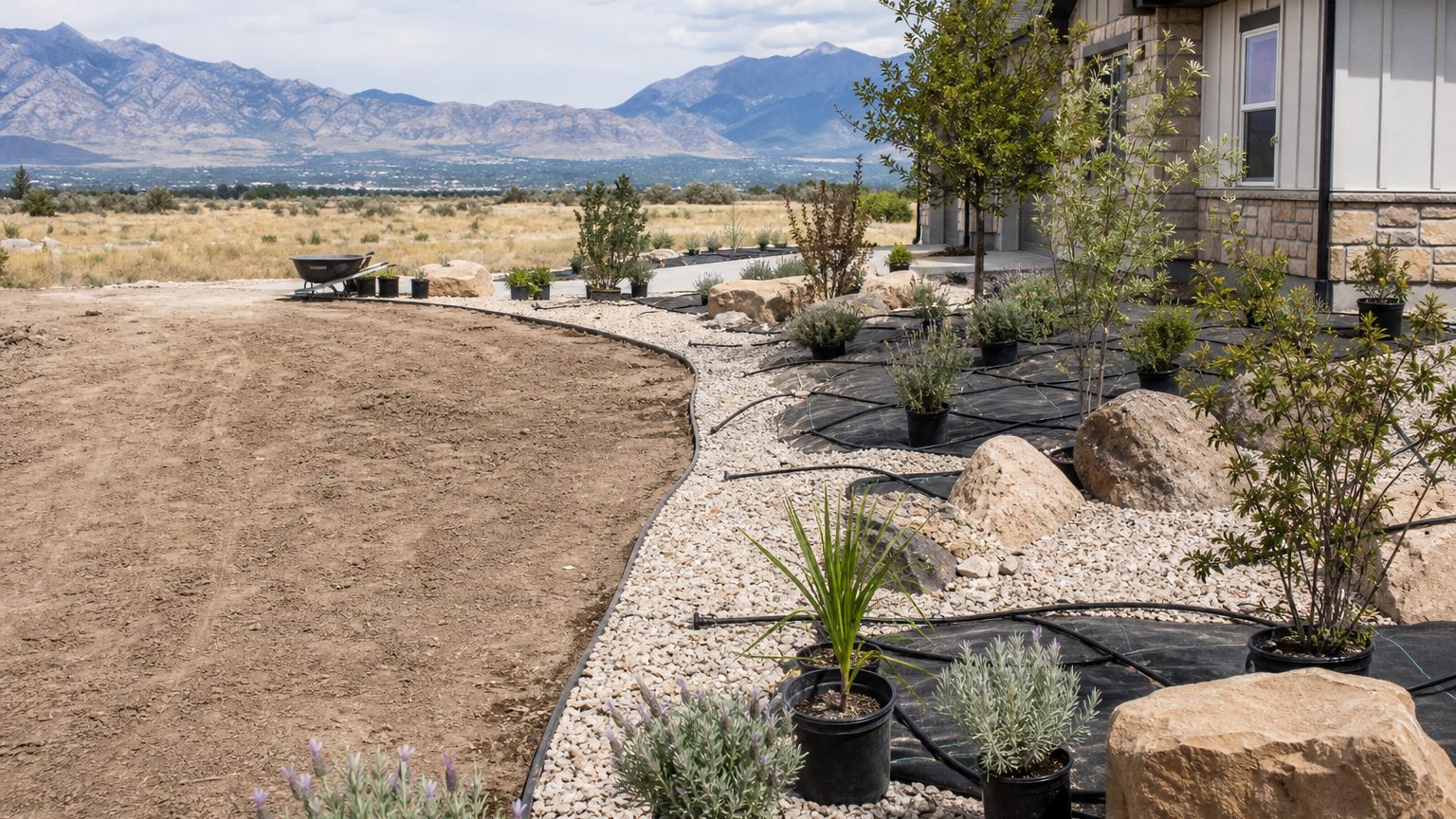
Pop-up sprinklers waste water in a xeriscape. Convert to drip irrigation in planting areas so water goes straight to the roots and not onto rock and pavement.
5) Plan the Hardscape
Decorative rock, boulders, edging, walkways, and dry creek beds give the design structure. Without hardscape, a xeriscape can look thin and flat. Boulders especially anchor the design in larger areas. See our boulder work for ideas.
6) Install Quality Underlayment
Skip the cheap landscape fabric. Use a heavy, breathable weed barrier under rock areas, and topdress with the right depth (typically 2–3 inches) so weeds do not push through after a single season.
Common Mistakes to Avoid
- Going all-rock with no plants. Pure gravel landscapes reflect heat, look harsh, and lose curb appeal quickly.
- Skipping irrigation conversion. Leaving turf-style sprinklers running on a rock yard wastes water and damages plants.
- Choosing the wrong plants. Cactus and succulents that thrive in Arizona will not survive a Utah winter.
- Ignoring drainage. Rock yards can channel water in ways grass never did. Plan for where the runoff goes.
- Forgetting maintenance. Xeriscape is low maintenance, not no maintenance. Plan for occasional weeding, plant trimming, and rock top-ups.
How Much Water Can You Actually Save?
A typical Northern Utah lawn uses 25–35 gallons of water per square foot per season. A well-designed xeriscape can drop that to under 10 gallons, depending on plant choices and design. For a 1,500-square-foot front yard, that adds up to tens of thousands of gallons saved every summer — and a noticeably smaller water bill.
What About Resale Value?
A thoughtful xeriscape generally helps resale in Northern Utah. Buyers increasingly see big thirsty lawns as a liability, not a feature. The key is “thoughtful” — a clean, designed xeriscape adds value; a quick rock-dump does not.
When to Call a Professional
Small conversions can absolutely be DIY. For larger projects — full front-yard or back-yard conversions, slope work, irrigation redesign, or boulder placement — professional help saves money in the long run. Issues like drainage, weed control, plant selection, and irrigation efficiency are much harder (and more expensive) to fix after the fact.
Gold’s Landscaping Can Help
We design and install desert landscapes and xeriscape conversions across Northern Utah. Whether you want a complete teardown of an old lawn or a gradual conversion that protects key planting areas, we can help you plan it out, choose the right plants, and build a yard that looks great with a fraction of the water.
Call 801-824-1453 for a consultation, or contact us online.