


Paver Patio vs. Concrete Patio — Which Is Right for Your Utah Yard?
- Landscaping
-
Comment (0)

Paver Patio vs. Concrete Patio — Which Is Right for Your Utah Yard?
Paver Patio vs. Concrete Patio: Which Is Right for Your Utah Yard?
If you are planning a new backyard patio, driveway extension, or outdoor living pad, you will likely land on two main options: pavers or poured concrete. Both work in Northern Utah when they are built correctly—but they behave differently in our freeze–thaw climate, and they come with different looks, costs, and long-term maintenance. Here is an honest comparison to help you decide.
Quick Comparison at a Glance
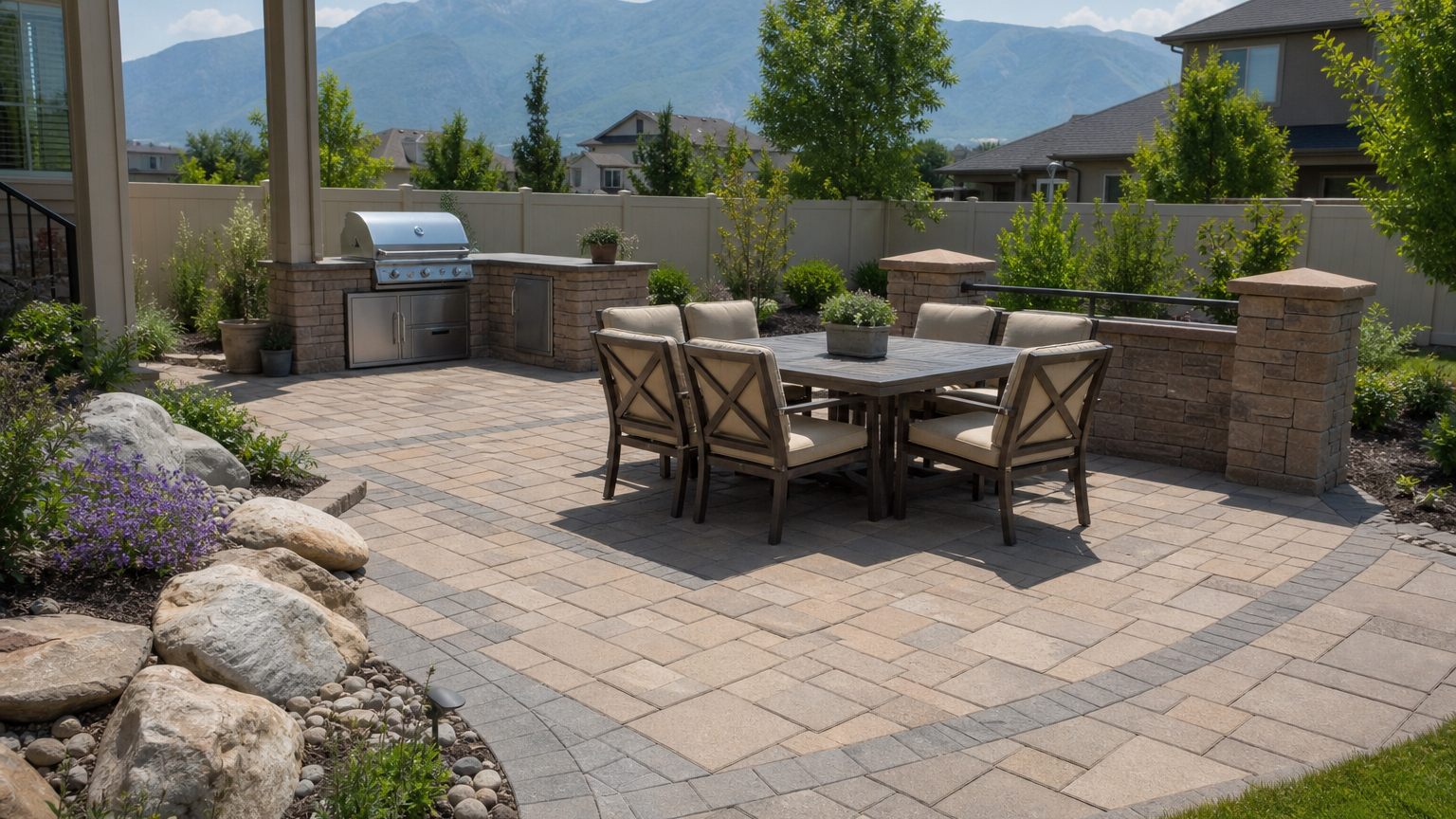
- Pavers — Individual units on a compacted base; flexible joints; easier spot repairs; wide style range; typically higher upfront cost.
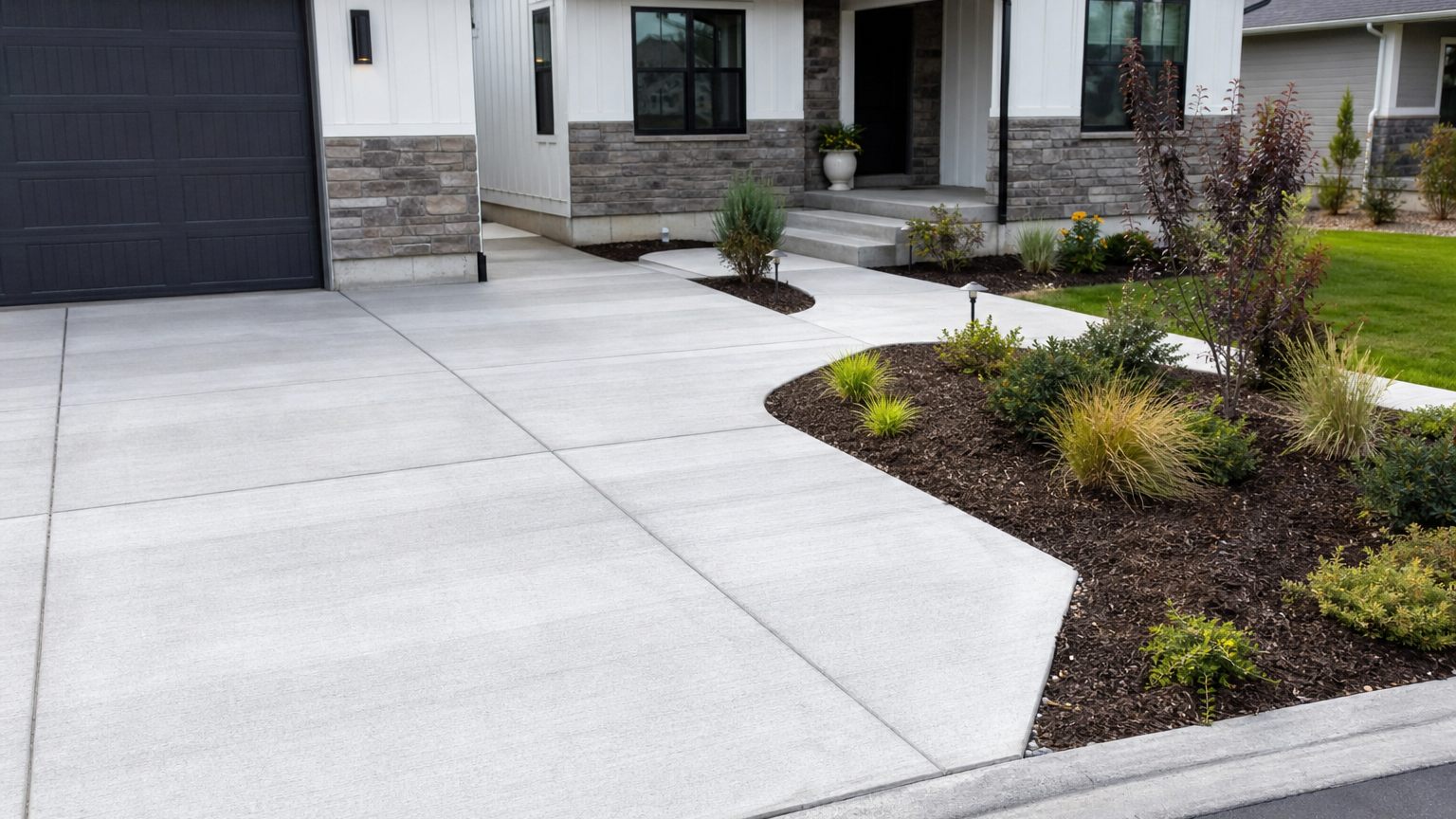
- Concrete — Monolithic slab on a base; clean, continuous surface; strong for large spans; control joints manage cracking; often lower cost per square foot.
Neither choice is automatically “better.” The right pick depends on your budget, how you use the space, slope and drainage, and the look you want from curb to backyard.
How Each Option Performs in Utah’s Climate
Northern Utah sees hot, dry summers and cold winters with repeated freeze–thaw cycles. That movement stresses any hardscape.
Pavers
Because pavers are individual pieces with sand or polymeric joints between them, the surface can flex slightly with soil movement instead of cracking through one solid slab. When base work is done right—proper excavation, compaction, and edge restraint—paver patios tend to handle seasonal shifting well. If a unit chips or settles, you can lift and replace that section without redoing the whole patio.
Concrete
Concrete is rigid. All concrete cracks eventually; the goal is to control where it happens with thickness, reinforcement, joint layout, and a stable base. In Utah, poor drainage or weak subgrade is what turns normal hairline cracking into heaving and trip hazards. A professionally poured slab with correct pitch, joints, and cure time performs reliably for driveways, large patios, and RV pads where a continuous surface matters.
Cost: What to Expect
Costs vary by size, access, demolition, base conditions, and finish level. In general:
- Concrete often has a lower installed cost per square foot for straightforward rectangles with a broom or smooth finish.
- Pavers usually cost more upfront because of material, cutting, edging, and labor-intensive placement—but repair costs over time can be lower.
Stamped or decorative concrete narrows the price gap. Premium paver patterns, borders, and curves can widen it. Always compare apples to apples: base depth, haul-off, drainage, and edge details should be included in both estimates.
Appearance and Design Flexibility
When pavers make sense
- You want a natural stone or brick look with color variation
- The layout has curves, bands, or mixed patterns
- You are tying into existing hardscape or stepping paths
- You prefer a surface that can be refreshed section by section years later
When concrete makes sense
- You want a clean, modern slab with minimal joints visible
- You need a large, open area for furniture, basketball, or RV parking
- You are matching an existing concrete driveway or garage apron
- Budget is tight and the footprint is simple
Both can pair with fire pits, seat walls, and retaining walls for a full outdoor living plan.
Maintenance and Repairs
Pavers: Periodic joint sand top-up, occasional sealing depending on product, and weed control in joints if neglected. Settled areas can be re-leveled; damaged pavers swapped out.
Concrete: Sealing optional but helpful for stain resistance. Cracks may need routing and filling; significant heaving can require replacement of a panel or full section. Salt and de-icers on adjacent walks can affect edges—plan drainage so water does not pool and freeze on the slab.
Drainage and Base Work (Do Not Skip This)
Whether you choose pavers or concrete, failure almost always traces back to base and water—not the surface material. Both need:
- Correct excavation and compaction
- Stable aggregate base in lifts
- Proper slope away from the house (typically 1–2% minimum)
- Edge support so the perimeter does not spread
On sloped lots, tie-ins to retaining walls or grade changes must be planned before pour or paver install.
Which Should You Choose?
Choose pavers if you value design flexibility, easier repairs, and a classic hardscape look—and you are comfortable with a somewhat higher initial investment.
Choose concrete if you want a large, simple, continuous surface, need to match existing concrete, or want the most square footage for your budget on a straightforward layout.
Still torn? Many homeowners use both: concrete for driveways and RV pads, pavers for the backyard gathering zone. A pro can help you split the plan so each area gets the right material.
Get a Professional Opinion
Gold’s Landscaping installs paver and flagstone patios and concrete flatwork across Northern Utah. We will walk your site, talk through how you use the space, and give you a clear estimate—without pushing you toward the option that does not fit your yard.
Call 801-824-1453 for a consultation, or contact us online.